
Who is? Brain Teaser & Riddles
Unico StudioTrivia
4.725.45K Reviews
- Version
- 1.14.9
- Installs
- 50.00M
- Age Rating
- Everyone 10+
Screenshots
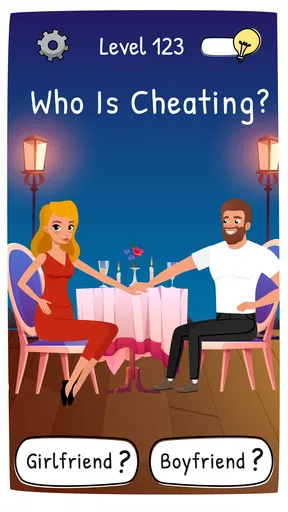
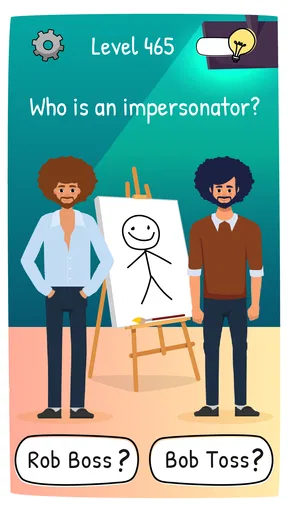
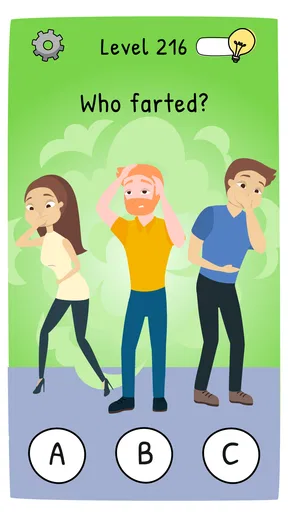
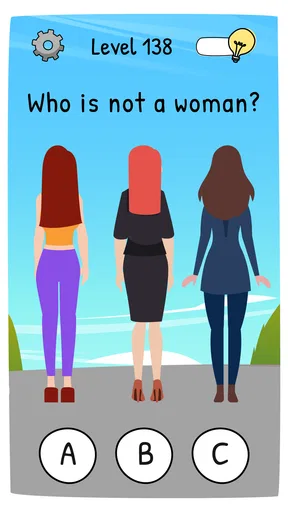
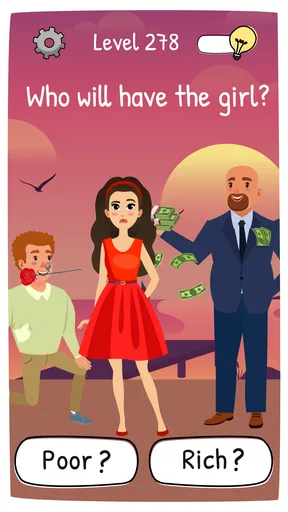
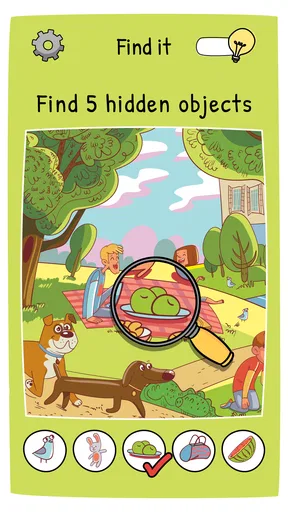
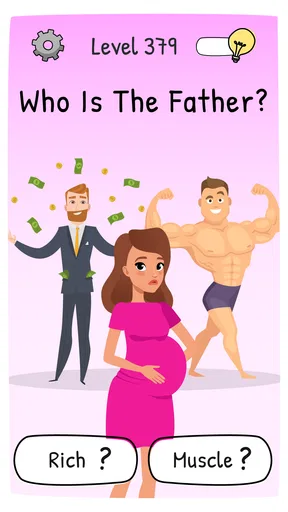
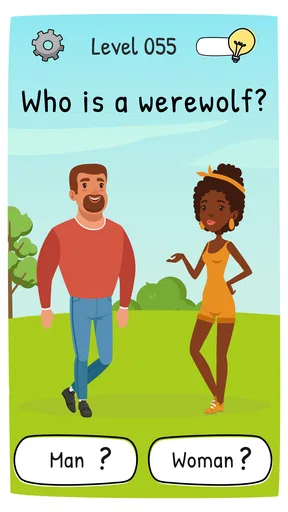
Our Review of Who is? Brain Teaser & Riddles
 Analysis by Appyee
I went into Who is? Brain Teaser & Riddles expecting a light trivia game, but its real appeal is closer to solving small visual mysteries. Each challenge asks me to inspect a scene, read the wording carefully, and decide which detail matters. Sometimes the answer is obvious after a few seconds; other times I have to stop treating the picture as decoration and start looking for the clue that the puzzle is quietly pointing toward.
That makes it a good choice when I want something casual but more involving than endlessly answering general-knowledge questions. It is free to start, aimed at players aged 10 and up, and developed by Unico Studio. After spending time with it, my main conclusion is simple: this is best enjoyed as a short, playful exercise in observation and lateral thinking, not as a serious test of intelligence or a replacement for a deep puzzle adventure.
Why the puzzles work better than ordinary trivia
The strongest part of the game is the way it turns familiar situations into questions about attention. A normal trivia title usually rewards stored knowledge: you either know the answer or you do not. Here, the useful skill is often noticing an inconsistency, interpreting a sentence in an unexpected way, or questioning the assumption built into the scene.
I found that difference important during short sessions. If I had only a few minutes, I could still complete a handful of challenges without needing to remember facts from school or keep track of a complicated story. The game creates a small loop: examine the prompt, form a theory, tap an answer or interact with the scene, then learn whether my reading was sensible or too literal.
The puzzles also encourage a useful habit that many mobile games ignore: slowing down. When I rushed, I often focused on the most dramatic object in the picture and missed a smaller clue. The better approach was to scan the entire screen, reread the question, and ask what the game wanted me to overlook. That makes the experience feel more active than simply picking one answer from a list.
The best puzzles reward careful observation rather than fast tapping. That is a meaningful strength for players who enjoy riddles but do not want a demanding action game. It also gives parents and older children a simple shared activity, since discussing why an answer works can be more entertaining than reaching it alone.
How I approach a difficult level
My most reliable method is to separate the wording from the artwork. First I read the question without touching anything. Then I inspect people, objects, positions, and unusual details one by one. Finally, I return to the wording and look for a double meaning or an assumption I made automatically.
This process matters because the game can make a straightforward scene feel complicated by directing my attention toward the wrong explanation. If I am stuck, I avoid tapping randomly. Instead, I ask three practical questions: what looks out of place, what detail would be unnecessary in a normal illustration, and whether the question is asking me to identify a person, explain an event, or find a hidden clue.
That approach is also a useful way to play with someone else. One person can describe the scene while the other explains the suspected trick. It turns a solitary phone game into a quick conversation during a commute, a break, or a relaxed evening. I especially liked that the discussion often revealed how differently two people interpret the same visual clue.
Hints are most useful when treated as a last resort
When a puzzle refuses to make sense, a hint can keep the session moving, but I recommend waiting before using one. The satisfaction in this game comes from making the connection myself, and spending help too quickly can flatten that moment. I usually give a level one careful reread and a full visual scan before asking for assistance.
A practical trick is to use a hint only after I have identified the type of problem. If I am missing a tiny visual detail, I inspect the scene again. If the wording seems strange, I focus on its exact phrasing. If the whole situation appears impossible, I look for a joke or a reversal rather than trying to apply real-world logic. This prevents hints from becoming a substitute for thinking.
Players should also expect the difficulty to feel uneven. Some challenges can be solved almost immediately, while others depend on a particular interpretation that may not be the first one a reasonable person considers. That inconsistency is part of the charm for casual play, but it can frustrate anyone who wants a carefully calibrated progression from easy to expert.
What makes the experience accessible
The basic idea is easy to understand even for someone who rarely plays games. There is no need to learn a large control system or memorize a long plot before the puzzles become enjoyable. The age guidance of Everyone 10+ fits the tone: the game is approachable for younger players with enough reading ability, while adults can still appreciate the wordplay and visual misdirection.
Its broad reach is reflected in its audience. The game has passed 50 million installs and holds a 4.7 average from around 1.8 million ratings, with roughly 25 thousand written reviews. Those figures do not guarantee that every puzzle will suit every player, but they do suggest that the format has connected with a very large mobile audience.
It is also a convenient option for people who dislike the pressure found in timed quiz games. I can pause between puzzles, think at my own speed, and return later without needing to remember a complex set of rules. That makes it suitable for waiting rooms, short journeys, or the few minutes before bed, provided I am comfortable with the possibility that one stubborn riddle may take longer than expected.
Where the game loses some of its shine
The biggest weakness is that the cleverness can depend on guessing the creator's intended trick. In a good riddle, the answer feels inevitable once it is revealed. In a weaker one, I may understand the explanation without feeling that I could reasonably have reached it. That distinction matters because the entire experience is built around the pleasure of solving rather than merely seeing the solution.
Some players will also find the repeated structure less satisfying than a traditional puzzle game with a continuous mystery. The individual challenges are designed to be consumed in small pieces, so there is not the same sense of building a theory across chapters or developing a relationship with recurring characters. If I want a rich narrative investigation, I would choose a story-driven mystery instead.
The free entry point is helpful, but in-app purchases range from $1.99 to $14.99 per item. That means I would pay attention to how often I rely on optional help before spending anything. For me, the better value comes from treating hints as occasional support rather than part of the normal solving routine. Players who dislike any purchase prompts or who want one complete, fixed-price experience may prefer a paid puzzle title with a clearer one-time model.
Another limitation is replay value. Once I know the trick behind a particular scene, returning to it cannot recreate the original challenge. This is normal for riddle games, but it makes the title more dependent on having a steady supply of puzzles that feel fresh. It works best as an ongoing casual activity, not as a game I expect to replay from the beginning for the same experience.
Who should download it
I would recommend it to anyone who likes visual riddles, “spot the clue” challenges, and quick brain teasers that can be solved without specialist knowledge. It is particularly well suited to players who enjoy explaining an answer after the reveal, because the fun often comes from seeing how the puzzle guided attention in the wrong direction.
It is a strong fit for a family phone or a shared tablet too. A parent can let a child suggest what to inspect, while the adult checks whether the wording contains a trick. Since the age rating is Everyone 10+, the tone is more appropriate for that setting than many competitive or heavily social alternatives, although I would still consider the reading level of the individual player.
Imagine waiting for a train with a friend. Instead of opening a long game that demands full concentration, I could play a few riddles, hand over the phone when I get stuck, and compare interpretations. That is where this title feels most natural: as a conversation starter and a compact mental break, rather than an all-night commitment.
I would not choose it for someone who wants rigorous logic puzzles with one formally provable solution. I would also skip it if my priority were a large trivia database covering history, science, sport, or geography. Despite belonging broadly to the trivia space, this game is driven more by visual reasoning and wordplay than by factual recall. A conventional quiz app is the better alternative for testing knowledge directly.
Likewise, players who dislike ambiguity should approach carefully. The game can be entertaining precisely because it asks me to challenge my first interpretation, but that same design can feel arbitrary when the intended answer is not clearly signposted. People who prefer calm, polished progression may enjoy a dedicated logic-puzzle collection more.
Device and version details worth knowing
The current version is 1.14.9, and it supports devices running Android 7.0 or later. That makes it accessible to many older Android phones, although the actual comfort of play will still depend on screen size and how easily small visual details can be inspected. On a compact display, I found that taking an extra moment to examine the whole scene was more important than trying to solve quickly.
The game is free to download, which makes trying it low-risk if this style of puzzle sounds appealing. I would still decide in advance whether I am willing to use paid items, especially if I tend to spend impulsively when stuck. The most satisfying way to play is to give each riddle a genuine attempt first and regard optional help as a convenience, not as the intended route through every challenge.
Unico Studio has focused this title on immediate, self-contained challenges rather than a complicated interface. That is good for accessibility, but it also means the experience is not built around deep customization or a long-term personal strategy. I can pick it up quickly, understand what it wants from me, and put it down just as easily.
My final take after playing
Who is? Brain Teaser & Riddles succeeds because it understands the pleasure of a small mental trap. The strongest moments arrive when I notice the detail I dismissed, reinterpret a sentence, and realize that the solution was visible all along. Those moments are quick, clear, and satisfying enough to make the next puzzle tempting.
Its weaker moments come from the same design. When the intended trick feels too dependent on a specific guess, the reveal can seem less clever and more like a correction from the game. The lack of a substantial story and the uneven challenge curve also limit its appeal for dedicated puzzle fans.
Even with those reservations, I think it is worth trying for casual players who want something more thoughtful than a standard quiz but less demanding than a full mystery adventure. The free format, broad age appeal, and short-session structure make it easy to fit into everyday life. My advice is to play slowly, inspect every corner, reread the wording, and resist using help until you have tested your first few theories.
My recommendation is positive, with one clear condition: choose it for playful observation and lateral thinking, not for perfectly rigorous logic. If that distinction matches what you want from a mobile trivia game, this is an enjoyable little collection of mysteries to keep nearby for spare moments.
Verdict
Strengths of Who is? Brain Teaser & Riddles
- Hundreds of short riddles make it easy to play in quick sessions.
- Simple controls and clear layouts are suitable for most age groups.
- Clues can help players progress when an answer feels difficult.
- Offline play is useful when you have no internet connection.
- Solving puzzles can encourage lateral thinking and attention to detail.
Limitations of Who is? Brain Teaser & Riddles
- Some riddles rely on wordplay that may be difficult for non-native speakers.
- Repeated puzzle styles can make longer play sessions feel predictable.
- Hints may be limited, making certain challenging levels frustrating.
- Advertising can interrupt the flow between puzzles.
- The game may offer limited appeal once all available riddles are completed.
Other Releases by Unico Studio
View All
Brain Test 2: Tricky Stories
Trivia4.7

Brain Test: Tricky Puzzles
Trivia4.7

Brain Test 3: Tricky Quests
Trivia4.7

Popular Words: Family Game
Trivia4.8
Similar Picks in This Category
View All
Millionaire 2026 Quiz & Trivia
Quiz & Trivia Games by Submarine Apps4.5
Brain Test 2: Tricky Stories
Unico Studio4.7

Trivia Crack: Brain Quiz Games
etermax4.4

QuizzLand. Quiz & Trivia game
Quiz & Trivia Games by Mno Go Apps4.8
Brain Test: Tricky Puzzles
Unico Studio4.7

Logo Quiz
bubble quiz games4.5
Frequently Asked Questions
What is Who is? Brain Teaser & Riddles?
Who is? Brain Teaser & Riddles is a casual puzzle game built around short mysteries, logic challenges, and visual riddles. Each level presents a situation, question, or group of characters, and you must identify the correct person or solution by examining the clues. The game is designed for quick sessions, making it suitable for players who enjoy simple detective-style puzzles and brain teasers.
How do you play Who is? Brain Teaser & Riddles?
Gameplay is based on observation, reasoning, and experimentation rather than fast reflexes. You read the level prompt, inspect the characters or objects on screen, and tap the element that you believe provides the answer. Some puzzles require thinking beyond the obvious wording, while others involve interacting with the scene. If you get stuck, hints may help reveal the intended solution.
Is Who is? Brain Teaser & Riddles suitable for children?
The game is generally accessible to a broad audience because its controls are simple and the puzzles are presented in a cartoon-style format. However, difficulty and humor can vary between levels, and some riddles may require reading comprehension or abstract thinking. Parents should review the store listing, age rating, advertisements, and in-app purchase information before allowing younger children to play.
Can Who is? Brain Teaser & Riddles be played offline?
Many puzzle levels may remain playable without a continuous internet connection once the necessary game data has been installed. Nevertheless, online access can still be required for advertisements, optional rewards, analytics, updates, or certain features. Offline availability may also differ between versions and devices, so it is best to test the game in airplane mode after installation rather than assuming every function will work without internet.
Does Who is? Brain Teaser & Riddles contain ads or in-app purchases?
The game may use advertising as part of its free-to-download model, and players can encounter ads between levels or after requesting hints and rewards. Depending on the version, optional purchases may also be available to remove advertising, obtain hints, or unlock additional content. Before downloading, check the official Google Play or App Store listing for the current pricing, permissions, and purchase details.
Play our best games!


